

You didn’t start your business to become a marketing expert, a customer service manager, and an operations coordinator all at once. But that’s exactly what happened.
Now you’re stretched so thin that the work you actually love—the reason you started this business—gets pushed to the side while you’re buried in follow-ups, social media posts, and administrative tasks that never seem to end.
You’ve tried the usual solutions. Maybe you dabbled with AI tools like ChatGPT or automation software. Perhaps you hired a contractor or two. But nothing quite solved the core problem: there’s too much work and not enough of you to go around.
What if there was a different approach? Not another tool to learn. Not another subscription to manage. But an actual team member who works in your business, understands your brand, and never clocks out.
That’s what AI employees are. And they’re changing the game for small businesses everywhere.
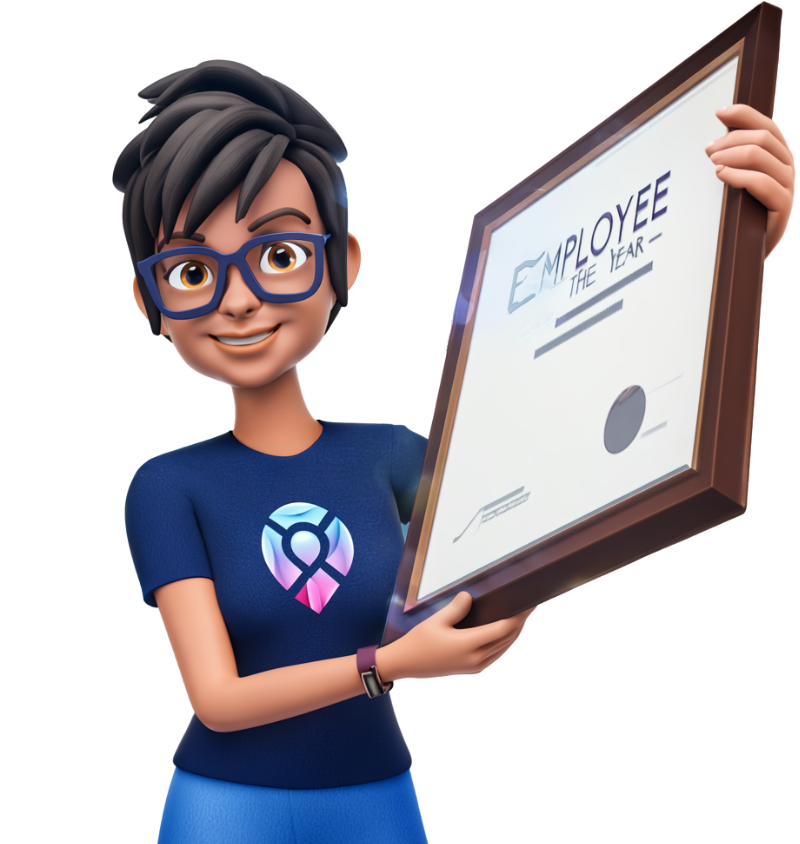
An AI employee is a trained digital team member who performs specific roles within your business—just like a human employee would.
But here’s what makes them different from the AI tools you’ve heard about: AI employees don’t just assist you. They work for you.
Think of it this way: Canva is a tool. You have to open it, use it, and do the work yourself. An AI marketing employee, on the other hand, creates your content, schedules your posts, monitors your campaigns, and adjusts strategies based on performance—while you focus on serving customers.
The difference is fundamental. Tools require you to do the work. AI employees do the work for you.
They integrate into your business like any other team member. They learn your brand voice, understand your goals, and execute tasks independently. The only difference? They work 24/7, never call in sick, and cost a fraction of a full-time hire.
If you’ve experimented with ChatGPT, automation platforms, or AI writing assistants, you might be wondering: isn’t that the same thing?
Not quite.
Here’s the key distinction:
| AI Tools: | AI Employees: |
|---|---|
| You manage them Require your time and input Solve one specific task at a time You’re still doing the work—just faster Need technical skills to use effectively | Work independently Require minimal oversight No technical skills needed Handle entire workflows and processes They do the work—you focus on growth |
Let’s use a real example. Say you need to follow up with 50 leads from a tradeshow.
With an AI tool, you might use ChatGPT to draft follow-up emails. You’d still need to customize each one, send them manually, track responses, and schedule meetings yourself. You’re using AI to help, but you’re still managing the entire process.
With an AI employee (like a Follow-up Assistant), you hand over the lead list. The AI employee reaches out automatically within 24 hours, qualifies interest through natural conversation, handles objections, and books appointments directly on your calendar. You wake up to scheduled meetings. No manual work required.
That’s the difference. One assists you. The other works for you.
For decades, small businesses have been competing with one hand tied behind their backs.
Big corporations have full marketing teams, dedicated sales reps, 24/7 customer service departments, and operational staff that keeps everything running smoothly. Small business owners? They’re doing all of that themselves—usually after hours and on weekends.
AI employees level that playing field.
Suddenly, a solo law firm can have a client intake specialist who qualifies leads around the clock. A real estate wholesaler can have an acquisition specialist reaching out to motivated sellers while they sleep. A local contractor can have a marketing employee managing their online presence without needing to hire a full-time marketer.
Here’s what that means in practice:
You reclaim your time. Stop spending nights and weekends catching up on tasks that AI employees can handle. Focus on the high-value work only you can do—strategy, client relationships, and growing your business.
You scale without hiring. Adding a human employee means payroll, benefits, training, and management overhead. AI employees integrate immediately, work around the clock, and cost a fraction of a full-time hire.
You compete with confidence. Big brands have always-on teams. Now you do too. Your AI employees ensure you never miss an opportunity, never drop a lead, and never fall behind on execution.
The businesses that thrive in the next decade won’t be the ones with the biggest budgets. They’ll be the ones who figured out how to build efficient, scalable teams—human and AI working together.
AI employees aren’t a future concept. They’re working in businesses right now, handling real responsibilities across different industries.
Here are a few examples of what AI employees actually do:
What they do: Manage your entire marketing execution—social media posts, ad campaigns, content creation, and reputation management.
Who needs this: Any business that struggles to stay visible online or can’t afford a full-time marketing team.
Real impact: A local HVAC company went from posting sporadically (whenever the owner had time) to consistent daily content, optimized ad spend, and proactive review management. Their online visibility increased, and they started getting calls from customers who found them through their improved online presence.
What they do: Automatically follow up with leads within 24-48 hours, qualify their interest, handle objections, and book appointments on your calendar.
Who needs this: Tradeshow exhibitors, sales teams, real estate agents, and anyone who collects leads but struggles to follow up quickly.
Real impact: A business that exhibits at home shows used to collect hundreds of leads but only followed up with about 10% of them (the owner simply didn’t have time). Now, their AI Follow-up Assistant reaches out to every single lead within 24 hours and books appointments automatically. They’re closing more deals from the same shows without any additional effort.
What they do: Handle initial client inquiries for law firms—asking qualifying questions, gathering case details, and scheduling consultations with attorneys.
Who needs this: Solo practitioners and small law firms who can’t afford a full-time intake coordinator but lose potential clients who call after hours.
Real impact: A personal injury attorney was missing calls during court appearances and after business hours. Their AI intake specialist now handles those inquiries 24/7, ensuring no potential client slips through the cracks.
What they do: Qualify seller leads, gather property details, and schedule appointments for real estate wholesalers and investors.
Who needs this: Real estate professionals who need to process high volumes of motivated seller inquiries.
Real impact: A real estate wholesaler was spending hours each day on the phone with unqualified sellers. Their AI Acquisition Specialist now pre-qualifies every lead, so the wholesaler only talks to motivated sellers who are ready to do business.
These aren’t hypothetical use cases. These are real AI employees performing real work right now.
If you’re picturing a robot sitting at a desk, that’s not quite it.
AI employees work in what we call an AI Office Space—a digital environment where they clock in, access the tools they need, execute their responsibilities, and deliver results. They’re always on, always working, and always improving.
Here’s how businesses integrate AI employees into their operations:
Just like hiring a human employee, you start by onboarding your AI employee into your business. This means training them on your brand voice, understanding your goals, and familiarizing them with your processes.
For example, if you’re hiring an AI marketing employee, they learn how you talk to customers, what makes your business unique, and what outcomes you’re trying to achieve. If it’s a follow-up assistant, they learn your qualifying questions, your scheduling preferences, and how to handle common objections.
This isn’t a complicated technical process. It’s more like having a conversation about your business—what you do, who you serve, and how you want things handled.
Once onboarded, your AI employee enters an orientation phase where they learn the specifics of your market, your customers, and your competitive landscape.
They study your past work, review your existing materials, and start to understand the nuances of your business. This is where they move from general knowledge to specialized expertise in your specific context.
Think of it like the first few weeks of a new hire—they’re getting up to speed, asking questions (when needed), and learning the ropes.
This is where the magic happens. Your AI employee is now fully trained and ready to execute independently.
You delegate tasks and workflows, and they handle them from start to finish. Need social media managed? They create, schedule, and post. Need leads followed up with? They reach out, qualify, and book meetings. Need client intake handled? They gather information and schedule consultations.
You’re not managing them minute-by-minute. You’re not reviewing every output. They work autonomously in your AI Office Space, and you see results.
Of course, you can always check in, provide feedback, or adjust their approach. But the day-to-day execution? That’s handled.
Let’s be honest about limitations. AI employees are powerful, but they’re not magic.
They can’t replace the human elements that make your business special—your expertise, your relationships, your strategic thinking. They can’t make complex judgment calls that require years of experience or deep emotional intelligence.
What they can do is handle the repetitive, time-consuming work that bogs you down. The follow-ups. The scheduling. The content creation. The data entry. The routine customer inquiries.
They free you up to do the things only you can do: close the big deals, solve complex problems, build relationships, and make strategic decisions.
Think of AI employees as the support system that allows you to be the best version of yourself in your business. They’re not replacing you. They’re amplifying you.
Here’s what most people get wrong about AI: they think it’s only for big companies with massive budgets and technical teams.
The opposite is true.
Small businesses actually have a unique advantage when it comes to AI employees. You’re nimble. You can make decisions quickly. You don’t have layers of bureaucracy slowing you down.
While large corporations are still figuring out how to integrate AI into their complex systems, small businesses are already putting AI employees to work—getting real results, reclaiming time, and competing more effectively.
The barrier to entry isn’t technical expertise or a huge budget. It’s simply understanding that this option exists and taking the first step.
You don’t need to become an AI expert. You don’t need to learn how to code. You just need to recognize that the way we think about “employees” is changing—and you have an opportunity to get ahead of that shift.
If you’re reading this and thinking, “This sounds great, but where do I even start?”—you’re not alone.
Most small business owners feel the same way. They know they need help, but the idea of adding another thing to manage feels overwhelming.
Here’s the good news: hiring an AI employee is actually easier than hiring a human one.
There’s no job posting, no interviewing process, no onboarding paperwork, no benefits to figure out. You identify the role you need filled, and your AI employee integrates into your business—often within days, not weeks.
The hardest part is simply making the decision to try something new.
Ask yourself: What would change in your business if you had a team member who handled the tasks eating up your time right now? What would you do with an extra 10, 20, or 30 hours a week? What opportunities are you missing because you’re stretched too thin?
Those aren’t rhetorical questions. They’re the reality small business owners face every day. And AI employees are the solution that’s finally accessible, affordable, and practical.
Five years ago, the idea of “hiring” an AI employee would have sounded like science fiction.
Today, it’s how forward-thinking small businesses are growing, competing, and thriving.
The businesses that figure this out early—the ones who start integrating AI employees into their teams now—will have an enormous advantage over those who wait. Not because AI is some magical technology, but because they’ll have more time, more capacity, and more consistent execution than their competitors.
You don’t have to do everything yourself anymore. You just have to be willing to build your team differently.
The choice is yours: keep grinding, doing everything yourself, and hoping you can keep up—or start building a team where humans and AI employees work together to create something bigger than you could build alone.
At Proximity, we’re an AI Workforce Management Agency that helps small businesses hire, train, and manage AI employees through our simpleAI Workforce Program.
Whether you need help with marketing, lead follow-up, client intake, or acquisitions—we deliver trained AI employees who work 24/7 in your AI Office Space.
Book a free strategy call and we’ll help you identify which AI employee would have the biggest impact on your business right now.

Greenville, South Carolina 29611

info@winwithproximity.com