
Whether you’re exhibiting for the first time or the fifteenth, the real opportunity isn’t just in the conversations you have at your booth. It’s what happens next.
You invested in booth space, prepared your display, gathered your marketing materials, and spent hours talking with potential customers.
Some conversations were promising. A few people seemed ready to take the next step. Others were simply exploring their options.
Then the show ended.
Now you’re back to answering calls, serving customers, preparing estimates, and managing everything else that keeps your business running.
Maybe your leads are already organized in your CRM and your sales team is working through them.
Or maybe you’re still sorting through business cards, contact forms, and handwritten notes.
Either way, the question is the same:
Are those conversations actually moving toward business opportunities?
Because collecting leads is only part of the equation. What happens afterward determines whether that initial interest has a chance to become something more.
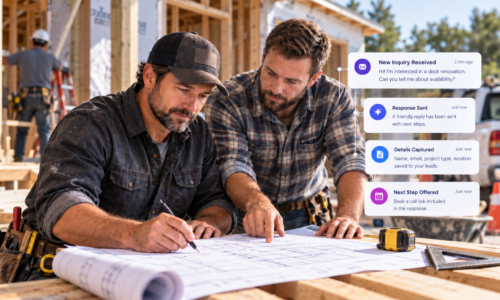
Imagine you’re a roofing contractor exhibiting at a home show.
A homeowner stops by your booth and mentions they’re considering replacing their roof. You have a great conversation, answer their questions, and exchange contact information.
They seem genuinely interested.
But they’re also talking to other contractors, comparing options, and deciding what makes sense for their home.
When the show ends, that conversation is only the beginning.
Following up gives you an opportunity to continue the relationship, answer additional questions, and help them take the next step.
A lead isn’t a sale. It’s an opportunity to continue a conversation.
And the businesses that make the most of those opportunities generally need more than a list of names.
They need a process that connects the conversation at the booth to what happens afterward.
Whether you’re building your first follow-up process or improving one you’ve used for years, these five stages can help you identify what’s working and where opportunities may be slipping through the cracks.
Most exhibitors know they need to collect contact information.
But a name, phone number, and email address only tell you so much.
What was the prospect interested in?
What questions did they ask?
Are they planning a project soon or simply gathering ideas?
Did they request a specific next step?
That context can make the difference between a relevant follow-up and a generic sales message.
For newer exhibitors, the priority may be establishing a consistent way to collect this information.
For experienced exhibitors, it may be improving the quality of the information already flowing into their CRM.
The goal isn’t simply to collect more leads. It’s to capture enough information to make the next conversation meaningful.
Not every person who visits your booth is ready to buy.
Some prospects may be ready to schedule an estimate or consultation.
Others may be researching options for a project several months away.
And some may simply be curious about what you offer.
Treating all three the same way can waste time and create a frustrating experience for prospects.
Instead, organize your contacts around their needs and readiness to move forward.
For example:
These categories don’t need to become a complicated scoring system.
They simply help your team decide who needs attention first and what kind of follow-up makes sense.
Better qualification helps you focus your attention where it can make the biggest difference.
Here’s where even well-organized lead lists can lose momentum.
Your team returns from the event, regular business responsibilities take over, and follow-up competes with everything else on the calendar.
But responding isn’t just about speed.
It’s also about relevance.
Remember the homeowner considering a roof replacement?
A message like this is much more meaningful than a generic promotional email:
“Hi James, it was great meeting you at the home show! We talked about the roof replacement you’re considering. I wanted to follow up and see if you’d like to schedule a time for us to take a look.”
That message reminds the prospect who you are, references their specific interest, and offers a clear next step.
For experienced exhibitors, the challenge may not be whether follow-up happens at all.
It may be whether every prospect receives the right response, at the right time, with the right information.
Good follow-up should feel like a continuation of the conversation—not the beginning of a generic marketing campaign.
Use communication methods consistent with the permissions and preferences prospects provided.
You’ve captured the lead, identified their interest, and followed up.
Now what?
If someone is ready to schedule an estimate, consultation, or demonstration, the process should be simple.
Offer a booking link, a direct phone number, or a few available appointment times.
If they requested additional information, make sure they receive it.
And don’t make prospects repeat details they’ve already shared.
For newer exhibitors, this might mean establishing a clear process for moving someone from inquiry to appointment.
For experienced exhibitors, it might mean identifying unnecessary steps, delays, or handoffs that make it harder for interested prospects to move forward.
The goal isn’t simply to generate more conversations. It’s to help qualified prospects take meaningful next steps.
This is where the conversation gets especially interesting.
Many exhibitors know how much they spent on an event.
They may also know how many leads they collected.
But those numbers don’t tell the whole story.
Consider these questions:
For first-time exhibitors, even tracking a few of these numbers can provide a useful baseline.
For experienced exhibitors attending multiple events, consistent measurement can help identify which shows, lead sources, and follow-up approaches are producing the strongest results.
And remember, the cost of exhibiting goes beyond the booth fee.
There’s also travel, staffing, marketing materials, preparation, and time away from regular business operations.
A successful event isn’t necessarily the one where you collected the most leads. It’s the one that generated meaningful value for your business.
Now, here’s something worth considering before your next event.
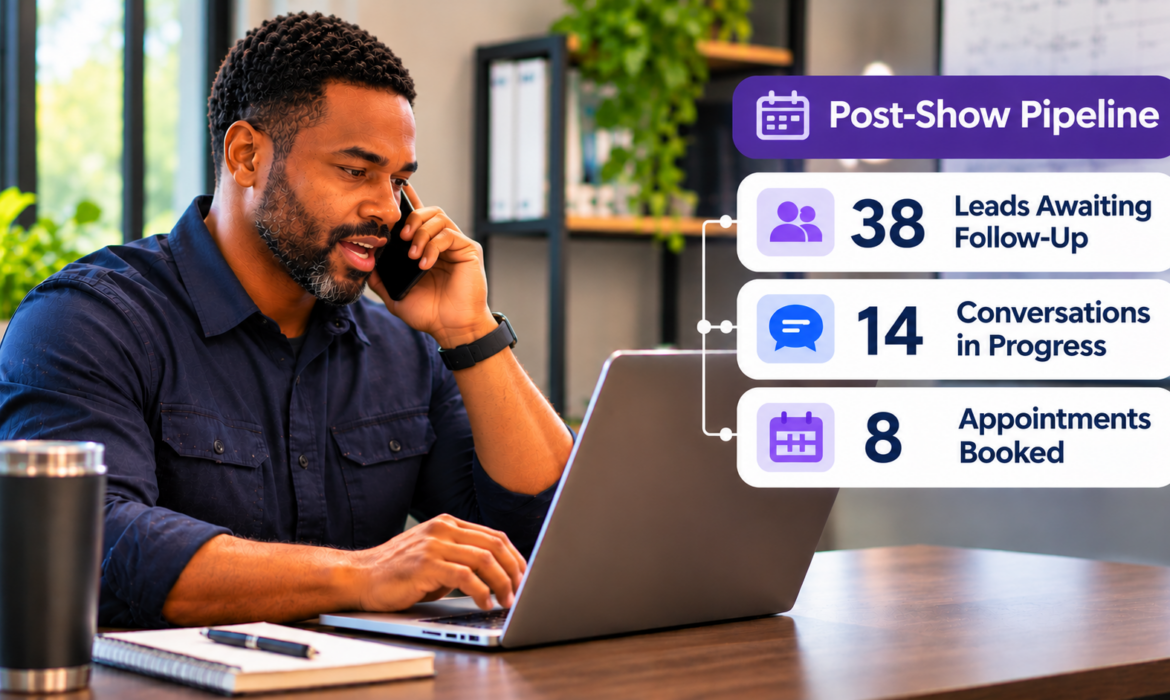
What if your team didn’t have to wait until Monday morning to begin following up?
Imagine someone visits your booth interested in a kitchen remodel.
Instead of simply collecting their name and phone number, you capture what they’re planning, their approximate timeline, and the information they requested.
They receive the relevant materials through an appropriate communication channel.
If they’re ready to schedule a consultation, they’re offered that next step.
And when your team returns to work, the conversation details are already organized.
No guessing what someone was interested in. No unnecessary data entry. No starting from scratch.
That’s where better processes, automation, and practical AI can make a difference.
Depending on your business and existing systems, technology may help capture information, send requested materials, gather additional details, organize follow-up, and support appointment scheduling.
But here’s something we believe strongly at Proximity:
AI should make your business easier to run—not become another thing you have to manage.
The right solution starts with understanding your existing process, identifying the gaps, and introducing technology where it adds meaningful value.
At Proximity Business Solutions, we’re talking with real exhibitors to better understand what happens between the conversations at their booths and the business opportunities that follow.
Those insights are helping shape ShowTime by Proximity, a solution we’re developing to support better lead capture, qualification, follow-up, and next-step scheduling.
For businesses exhibiting for the first time, that may mean establishing a dependable process from the beginning.
For experienced exhibitors, it may mean improving an existing workflow, reducing repetitive work, or helping their teams manage more opportunities without adding unnecessary complexity.
The goal isn’t to replace the relationships you build at an event.
It’s to help those relationships continue after the show ends.
And we’re approaching this work the same way we believe businesses should approach AI:
Start with the problem. Understand the process. Then determine where technology can help.
Whether this was your first event or your fifteenth, every show gives you an opportunity to learn.
Look beyond the number of leads you collected.
Think about how effectively your business captured information, identified promising prospects, followed up, helped people take the next step, and measured the results.
Where did things work well?
Where did conversations lose momentum?
And what could you improve before your next event?
You may not need a bigger booth, more marketing materials, or additional staff.
You may simply need a better system for turning interest into action.
Because the real opportunity doesn’t end when the show closes.
Real conversations. Better solutions.
About Proximity Business Solutions
Proximity helps small businesses improve how they operate through practical AI, automation, and better business systems.
Learn more at winwithproximity.com.